

Eyes
Double Eyelid Surgery in Seoul
A crease designed around your eyes, not a template — natural from the very first look.
No two eyes are alike, and the crease that suits them isn't either. Dr. Lee analyzes skin thickness, fat distribution, muscle strength, and any left–right asymmetry before designing a line from four shapes — in-line, semi-out-line, in-out-line, or out-line — that reads as simply yours.
The choice between the two isn't a matter of preference. Eyelid skin that's thin and minimally lax holds a crease well without ever being cut; thicker skin, more fat, or a looseness that would cause a non-incisional line to fade needs the structural reinforcement that only an incision provides. Dr. Lee makes that call during consultation, based on what your eyelid actually needs.
“A crease designed around your eyes, not a template — natural from the very first look.”
Uni offers two core techniques: non-incisional (natural adhesion) for thin, minimally lax eyelids, and incisional for thicker skin or eyelids that need more structural correction.
For international patients visiting Seoul specifically for double eyelid surgery, the consultation itself is where the real decision gets made — matching skin thickness and eyelid structure to one of the two techniques, and to a crease shape that suits the rest of the face rather than a photo brought in from elsewhere.
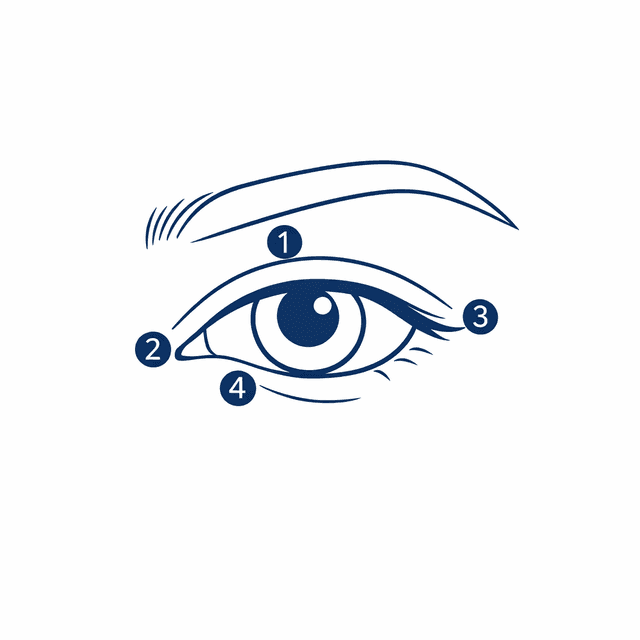
Know Your Anatomy
Which part of your eye area is the concern? Tap to see the matching procedure.
Planning Your Trip to Korea
We recommend staying in Korea for 7 days.
Follow-up clinic visits are scheduled on day 3, day 7 after your procedure.
Complimentary daily swelling-reduction laser sessions are included throughout your stay — visit as often as you'd like.
Is this right for you?
- Looking for a crease that reads as natural, not surgical
- Want a line matched to face shape rather than a generic template
- Considering double eyelid surgery for the first time
- Want a result that holds without frequent touch-ups
Not sure yet? Send a photo on WhatsApp and Dr. Lee Hee-young's team will give you an honest, no-obligation read before you decide anything.
Send a Photo on WhatsAppFrom Dr. Lee's Channel
Watch: Double Eyelid Surgery — Which Type Is Right for You?
Watch: Post-Surgery Swelling After Double Eyelid Surgery — What to Know
Watch: 3 Causes of Post-Surgery Eyelid Swelling
Which One Matches You?
These aren't interchangeable options — each addresses a different underlying structure. Dr. Lee confirms which one fits your case during consultation.
Non-Incisional (Natural Adhesion)
Fixes the eyelid through tiny punctures rather than a full incision, encouraging natural adhesion without visible scarring.
Duration
About 30 minutes
Anesthesia
Sedation or local
Hospital Stay
None
Stitch Removal
Not required
Recovery
5–7 days
This might be you if
- • Thin eyelid skin with little to no sagging
- • Prefer to avoid a fully incisional procedure
- • Prefer minimal scarring or swelling
- • Want a natural-looking crease
- 01Design the crease line to match your face and eye proportions
- 02Create six micro-punctures along the eyelid
- 03Thread and tie to encourage adhesion between skin and the levator muscle
- 04Finish with a natural, well-defined crease
Incisional
Opens the eyelid to address excess skin, fat, and muscle directly, producing a sharper and more durable crease.
Duration
About 40 minutes
Anesthesia
Sedation or local
Hospital Stay
None
Stitch Removal
7 days
Recovery
7–14 days
This might be you if
- • Thicker eyelid skin or reduced elasticity
- • Excess fat causing heaviness in the eyelid
- • A crease that tends to loosen or fade
- • Want eyelid-crease correction done at the same time
- 01Design the crease line to match your face and eye proportions
- 02Incise the eyelid according to the design
- 03Carefully remove excess fat and loose skin
- 04Fix the crease precisely along the incision line
Safety & What We'll Discuss
The most common concern after double eyelid surgery is a crease that looks too deep or puffy in the early weeks — what's sometimes called a 'sausage eye' look. This typically eases as swelling resolves over the following weeks; Dr. Lee will walk you through what's normal swelling versus what would need a follow-up visit.
Why Uni
Precision diagnosis for every eye
Skin thickness, fat volume, muscle strength, and asymmetry are assessed individually, and the surgical plan is built around that specific anatomy rather than a standard template.
Minimal-incision technique
Incisions are kept as small as needed and placed only where necessary, reducing unnecessary tissue damage and keeping scarring out of sight. The technique is designed with recovery time in mind.
A line built to last
Non-incisional surgery encourages tissue adhesion for a scar-free, natural result; incisional surgery secures skin and muscle directly for a sharper, more stable line.
What You Can Expect
Frequently Asked Questions
What's the difference between Non-Incisional (Natural Adhesion) vs. Incisional?
Non-Incisional (Natural Adhesion) — Fixes the eyelid through tiny punctures rather than a full incision, encouraging natural adhesion without visible scarring. Incisional — Opens the eyelid to address excess skin, fat, and muscle directly, producing a sharper and more durable crease.
How do I know which type applies to me?
Most patients can't tell from a mirror alone — non-incisional (natural adhesion) and incisional can look similar until Dr. Lee examines the underlying structure. Send a photo on WhatsApp for an initial read, then an in-person consultation confirms exactly which type fits your case before any decision is made.
How long is recovery, and how many days should I plan to stay in Korea?
We recommend planning to stay in Korea for about 7 days so we can see you through your follow-up visits.
Will the results look natural?
Yes. A crease that matches your face, not a template Fixation that holds — fewer repeat procedures
Our care philosophy
A trustworthy care system — named physicians only, no ghost surgery.
Responsible medicine — the operating surgeon sees the case through from start to finish.
Patient safety first — precise pre-op workup and planning, minimized tissue damage during surgery.
Aftercare that doesn't stop at discharge — swelling management, infection prevention, scar-care program.
Individual results vary. As with any surgery or procedure, this carries risks and possible side effects. Dr. Lee reviews your specific risk factors, alternatives, and what to expect in detail during your consultation before any decision is made.
Plan Your Double Eyelid Surgery With Dr. Lee Hee-young
Book a Free Consultation