

Nose
Bulbous Tip Rhinoplasty in Seoul
A round, heavy tip, refined into a slimmer, more defined line.
A low, round tip combined with spread cartilage and thick skin can read as heavy or indistinct, no matter how well-proportioned the rest of the face is. The fix isn't more height — it's controlling tip fat and cartilage, then refining a bridge and tip that often run wider than they need to.
Skin thickness changes the entire calculation. The same cartilage adjustment that produces a sharp, defined tip on thin skin can look almost unchanged under skin that's thick and oil-gland-dense, which is why bulbous-tip surgery is planned around the patient's actual skin type from the start, rather than applying one cartilage technique uniformly.
“A round, heavy tip, refined into a slimmer, more defined line.”
Dr. Lee analyzes the nose's anatomy alongside skin thickness and oil-gland density before adjusting the cartilage structure, producing a slimmer line without over-removing tissue.
Bulbous tip correction is one of the most frequently requested procedures among Uni's international rhinoplasty patients, and one where skin type — not just cartilage shape — determines how much change is realistic. That assessment happens in person, before your surgery is scheduled.
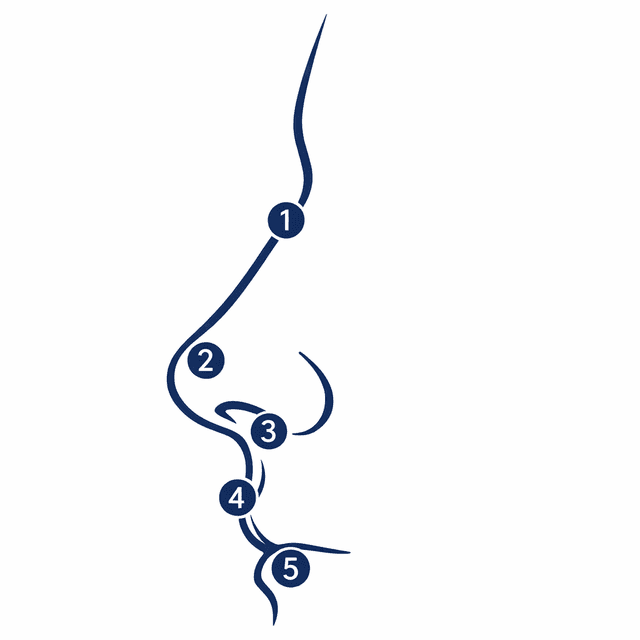
Know Your Anatomy
Which part of your nose is the concern? Tap to see the matching procedure.
Recovery & Follow-Up at a Glance
Clinic visits, stitch removal, and recovery time below are in addition to our standard aftercare — swelling management, infection prevention, and scar care through full recovery.
Duration
About 1 hour
Anesthesia
Local or sedation
Clinic Visits
3 visits
Hospital Stay
None
Stitch Removal
7 days
Planning Your Trip to Korea
We recommend staying in Korea for 14 days (7-day minimum if your schedule is tight).
Follow-up clinic visits are scheduled on day 3, day 7, day 14 after your procedure.
Complimentary daily swelling-reduction laser sessions are included throughout your stay — visit as often as you'd like.
Is this right for you?
- A tip that looks wide and spread from the front
- A round, low tip that reads as heavy or indistinct
- Thick tip skin with excess fat
- Wanting a slimmer, more refined nose line
- Wanting to correct spread nostrils and a blunt tip together
Not sure yet? Send a photo on WhatsApp and Dr. Lee Hee-young's team will give you an honest, no-obligation read before you decide anything.
Send a Photo on WhatsAppFrom Dr. Lee's Channel
Watch: Is Bulbous-Tip Rhinoplasty Right for You?
Watch: Bulbous Tip Before & After Transformation
Watch: Which Bulbous-Tip Cases See the Biggest Transformation
Watch: Bulbous Tip With Thick Skin — Getting the Technique Right
Watch: Bulbous Tip With Well-Developed Cartilage — The Right Approach
Which One Matches You?
These aren't interchangeable options — each addresses a different underlying structure. Dr. Lee confirms which one fits your case during consultation.
Wide Alar Cartilage
Trims the upper portion of the alar cartilage and draws both sides toward the center to slim a spread tip.
- 01Before surgery
- 02Trim the alar cartilage
- 03Draw the cartilage toward the center
- 04After surgery
Separated Alar Cartilage
Binds separated cartilage together and, where needed, adds autologous tissue to preserve three-dimensional shape and line.
- 01Before surgery
- 02Reinforce with a support structure
- 03Draw the cartilage toward the center
- 04Graft additional cartilage
Thick Subcutaneous Tissue at the Tip
Removes excess subcutaneous tissue to reduce the bulk of thick tip skin for a smoother result.
- 01Before surgery
- 02Incise inside the nose
- 03Remove tip fat
- 04After surgery
Safety & What We'll Discuss
Over-reducing cartilage in a bulbous tip correction can leave the tip feeling stiff or looking pinched — a risk Dr. Lee manages by removing only what the structure actually needs, confirmed against your specific cartilage and skin thickness during consultation.
Why Uni
A plan that starts with detailed analysis
Tip length and angle, columella condition, skin thickness, and adhesion are mapped in three dimensions before any design decision — the same diagnostic rigor applied to every nose case.
Design adjusted for thicker skin
Skin thickness and sebaceous gland development inform precisely how much the tip cartilage structure is adjusted, achieving a slimmer line without removing more tissue than necessary.
Material matched to your nose and skin
Septal cartilage, ear cartilage, dermis, donor or autologous rib cartilage, and a silicone bridge implant are chosen based on your specific needs.
What You Can Expect
Frequently Asked Questions
What's the difference between Wide Alar Cartilage vs. Separated Alar Cartilage vs. Thick Subcutaneous Tissue at the Tip?
Wide Alar Cartilage — Trims the upper portion of the alar cartilage and draws both sides toward the center to slim a spread tip. Separated Alar Cartilage — Binds separated cartilage together and, where needed, adds autologous tissue to preserve three-dimensional shape and line. Thick Subcutaneous Tissue at the Tip — Removes excess subcutaneous tissue to reduce the bulk of thick tip skin for a smoother result.
How do I know which type applies to me?
Most patients can't tell from a mirror alone — wide alar cartilage and separated alar cartilage can look similar until Dr. Lee examines the underlying structure. Send a photo on WhatsApp for an initial read, then an in-person consultation confirms exactly which type fits your case before any decision is made.
How long is recovery, and how many days should I plan to stay in Korea?
Stitches come out around 7 days. We recommend planning to stay in Korea for about 14 days (7-day minimum if your schedule is tight) so we can see you through your follow-up visits.
Will the results look natural?
Yes. Slimming that addresses the structure, not just the surface A line that stays proportionate to the rest of your face
Our care philosophy
A trustworthy care system — named physicians only, no ghost surgery.
Responsible medicine — the operating surgeon sees the case through from start to finish.
Patient safety first — precise pre-op workup and planning, minimized tissue damage during surgery.
Aftercare that doesn't stop at discharge — swelling management, infection prevention, scar-care program.
Individual results vary. As with any surgery or procedure, this carries risks and possible side effects. Dr. Lee reviews your specific risk factors, alternatives, and what to expect in detail during your consultation before any decision is made.
Plan Your Bulbous Tip Rhinoplasty With Dr. Lee Hee-young
Book a Free Consultation