

Eyes
Eye Revision Surgery in Seoul
Revision eye surgery isn't a redo — it's a more precise reconstruction, built on top of what the first surgery left behind.
A second eyelid surgery calls for more care than the first. Dr. Lee examines the front, middle, and back layers of the eyelid — skin and muscle, septal fat, and the levator and Müller's muscle — to find exactly why the original line loosened, sits asymmetrically, or became over-corrected.
The pattern is familiar: a crease that held for a while before loosening, a line set too low, or scarring that never quite settled. Each points to a different structural issue, which is why revision surgery can't follow a single script — it has to be diagnosed and planned individually, the same way a first surgery would be, but with the added complexity of existing scar tissue.
“Revision eye surgery isn't a redo — it's a more precise reconstruction, built on top of what the first surgery left behind.”
Most revisions are safe and advisable six months to a year after the first surgery, once the tissue has fully settled. Uni Plastic Surgery treats each case as a full redesign, not a patch — restoring both the eyelid crease and, where needed, eyelid function.
International patients considering eye revision in Korea often arrive with scans or notes from their original surgeon, which Dr. Lee reviews alongside an in-person exam before any surgical plan is set. Because revision results depend heavily on accurately diagnosing what went wrong the first time, this consultation step matters more here than for any other eye procedure.
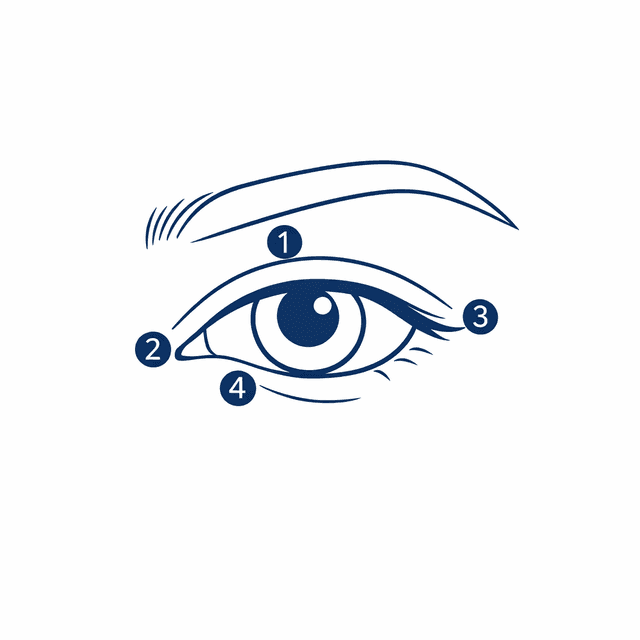
Know Your Anatomy
Which part of your eye area is the concern? Tap to see the matching procedure.
Recovery & Follow-Up at a Glance
Clinic visits, stitch removal, and recovery time below are in addition to our standard aftercare — swelling management, infection prevention, and scar care through full recovery.
Duration
About 1 hour
Anesthesia
Local
Hospital Stay
None
Stitch Removal
5–7 days
Recovery
5–7 days
Planning Your Trip to Korea
We recommend staying in Korea for 7 days.
Follow-up clinic visits are scheduled on day 3, day 7 after your procedure.
Complimentary daily swelling-reduction laser sessions are included throughout your stay — visit as often as you'd like.
Is this right for you?
- The double eyelid crease has loosened or disappeared
- The crease sits too low, or is visibly uneven between eyes
- Scarring from the first surgery is noticeable
- The crease is too thick, or multiple creases have formed
Not sure yet? Send a photo on WhatsApp and Dr. Lee Hee-young's team will give you an honest, no-obligation read before you decide anything.
Send a Photo on WhatsAppRelated Video
Watch: Swollen Eyes After Double Eyelid Surgery — When to Consider Revision
Which One Matches You?
These aren't interchangeable options — each addresses a different underlying structure. Dr. Lee confirms which one fits your case during consultation.
Suture Line Release
For patients with little remaining skin laxity: releases the existing adhesion and creates a new crease below the original line.
- 01Release scarring and adhesion from the original crease
- 02Create a new crease line below the existing one
- 03Refine into a natural-looking double eyelid
Line Lowering
For patients with some skin laxity: creates a new lower incision line, removes excess skin and scar tissue, then re-fixes the crease at the lower position.
- 01Create a new line below the original crease
- 02Excise excess skin and scar tissue
- 03Re-fix into a natural crease
Line Redesign
For a crease that has loosened entirely: reopens along the original incision and redesigns the crease to match the patient's eye structure.
- 01Redesign the loosened crease along the original incision
- 02Remove additional skin or fat as needed
- 03Close carefully for a well-defined line
Scar Revision
For significant scarring: carefully separates tissue bound by adhesion and removes scar tissue to restore natural eyelid movement.
- 01Incise and carefully dissect adhered tissue
- 02Release the original crease and remove excess skin or fat
- 03Form a new crease and close with precision
Safety & What We'll Discuss
Because revision surgery works with tissue that's already been operated on once, healing can be less predictable than a first surgery — scarring, numbness, or a crease that needs a further minor adjustment are all possibilities Dr. Lee discusses with you directly, based on what your specific case shows during consultation.
Why Uni
Finding the real cause of failure
Revision surgery succeeds or fails on the accuracy of the diagnosis. We assess all three eyelid layers to identify whether the issue is loosening, asymmetry, over-correction, or a combination — then plan the surgery around that specific cause, not a standard protocol.
Careful release of scar adhesion
Adhesion from the first surgery is the main obstacle in revision cases. Fine, deliberate dissection separates the affected tissue with minimal bleeding, keeping recovery in view from the first incision.
Built to hold this time
Fixation points are chosen based on the condition of the existing tissue and secured more firmly than a first surgery typically requires, using clinical experience built across many revision cases.
What You Can Expect
Frequently Asked Questions
What's the difference between Suture Line Release vs. Line Lowering vs. Line Redesign vs. Scar Revision?
Suture Line Release — For patients with little remaining skin laxity: releases the existing adhesion and creates a new crease below the original line. Line Lowering — For patients with some skin laxity: creates a new lower incision line, removes excess skin and scar tissue, then re-fixes the crease at the lower position. Line Redesign — For a crease that has loosened entirely: reopens along the original incision and redesigns the crease to match the patient's eye structure. Scar Revision — For significant scarring: carefully separates tissue bound by adhesion and removes scar tissue to restore natural eyelid movement.
How do I know which type applies to me?
Most patients can't tell from a mirror alone — suture line release and line lowering can look similar until Dr. Lee examines the underlying structure. Send a photo on WhatsApp for an initial read, then an in-person consultation confirms exactly which type fits your case before any decision is made.
How long is recovery, and how many days should I plan to stay in Korea?
Initial recovery takes about 5–7 days. Stitches come out around 5–7 days. We recommend planning to stay in Korea for about 7 days so we can see you through your follow-up visits.
Will the results look natural?
Yes. A line that's secured, not just redrawn Minimal additional scarring through fine dissection
When should I consider a revision?
Most revisions are safe and advisable six months to a year after your first surgery, once the tissue has fully settled. Operating too soon, before swelling and scarring have stabilized, makes it harder to see — and correct — what actually went wrong.
Our care philosophy
A trustworthy care system — named physicians only, no ghost surgery.
Responsible medicine — the operating surgeon sees the case through from start to finish.
Patient safety first — precise pre-op workup and planning, minimized tissue damage during surgery.
Aftercare that doesn't stop at discharge — swelling management, infection prevention, scar-care program.
Individual results vary. As with any surgery or procedure, this carries risks and possible side effects. Dr. Lee reviews your specific risk factors, alternatives, and what to expect in detail during your consultation before any decision is made.
Plan Your Eye Revision Surgery With Dr. Lee Hee-young
Book a Free Consultation