

Eyes
Ptosis / Eye Shape Correction in Seoul
A one-to-one analysis that brings definition to a tired-looking gaze.
A healthy eye shows about 5mm of the iris below the upper lid at rest; an eye that needs correction often shows 2mm or less — and when less than 80% of the iris is visible, the result reads as sleepy or tired no matter how well-rested you are.
The muscle responsible — the levator, assisted by Müller's muscle — can weaken from age, contact lens wear, or simply how someone was born. Strengthening its pull, rather than just cutting more skin, is what separates ptosis correction from a simple double eyelid procedure, and why the two are often done together when a sleepy-looking eye also lacks a defined crease.
“A one-to-one analysis that brings definition to a tired-looking gaze.”
Dr. Lee diagnoses the eye structure and the strength of the muscle that opens the eyelid, then corrects it with a method matched to that specific weakness — non-incisional for a lighter lift, incisional when the muscle itself needs repositioning.
Patients traveling to Gangnam for ptosis correction are often surprised to learn their sleepy-looking eyes have a specific, measurable cause — how far the iris shows at rest — rather than simply being how their face is shaped. That diagnosis is what determines whether non-incisional or incisional correction fits, confirmed during an in-person consultation before your surgery date is set.
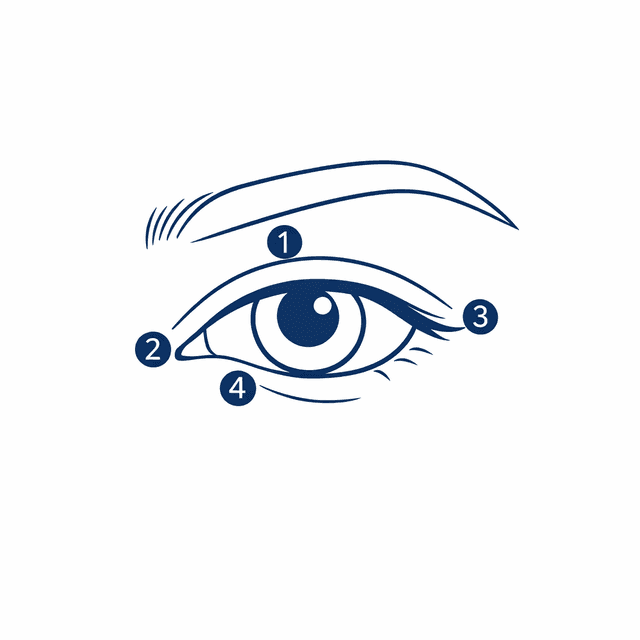
Know Your Anatomy
Which part of your eye area is the concern? Tap to see the matching procedure.
Planning Your Trip to Korea
We recommend staying in Korea for 7 days.
Follow-up clinic visits are scheduled on day 3, day 7 after your procedure.
Complimentary daily swelling-reduction laser sessions are included throughout your stay — visit as often as you'd like.
Is this right for you?
- A gaze that reads as sleepy or tired even when rested
- Considering ptosis correction alongside double eyelid surgery
- Want added eyelid volume without separate fat grafting
- Looking for a result that still looks like your own eyes
Not sure yet? Send a photo on WhatsApp and Dr. Lee Hee-young's team will give you an honest, no-obligation read before you decide anything.
Send a Photo on WhatsAppWhich One Matches You?
These aren't interchangeable options — each addresses a different underlying structure. Dr. Lee confirms which one fits your case during consultation.
Non-Incisional Ptosis Correction
Uses fine sutures rather than an incision to fix the eyelid and gently pull up the muscle that opens the eye.
Duration
About 30 minutes
Anesthesia
Sedation or local
Hospital Stay
None
Stitch Removal
Not required
Recovery
2–3 days
This might be you if
- • Mild muscle weakness causing a sleepy look
- • Thin eyelid skin with limited sagging
- • Concerned about scarring or swelling
- • Want the correction done alongside double eyelid surgery
- 01Assess the drooping, low-tension eyelid before surgery
- 02Create fine punctures in the eyelid
- 03Secure the orbicularis muscle to the tarsal plate and lift
- 04Finish with a clearly defined, more awake eye shape
Incisional Ptosis Correction
Opens the upper eyelid to directly adjust the position or strength of the levator and Müller's muscle.
Duration
About 1 hour
Anesthesia
Sedation or local
Hospital Stay
None
Stitch Removal
7 days
Recovery
7 days
This might be you if
- • Noticeably weak eyelid-opening muscle
- • Significant upper-eyelid skin or fat excess
- • Non-incisional correction unlikely to be sufficient
- • Want a clearly more defined eye shape
- 01Design and excise according to your eye shape
- 02Remove excess skin and fat
- 03Secure and lift the orbicularis muscle to the tarsal plate, then suture
- 04Finish with a clearly defined, more awake eye shape
Safety & What We'll Discuss
Ptosis correction carries a small risk of over- or under-correction, since the muscle being adjusted responds differently from person to person. That's why incisional cases are followed up closely in the first week, with adjustment still possible while healing is underway.
Why Uni
Diagnosis built on your own eyelid
Skin thickness, fat volume, muscle strength, and asymmetry are mapped individually before any surgical decision is made.
Incision kept to what's necessary
Only the area that needs correcting is opened, reducing tissue disruption and keeping any scarring out of sight.
Lift and volume, together
Correcting the muscle itself often restores natural volume to a hollow-looking eye — without a separate fat-grafting procedure.
What You Can Expect
Frequently Asked Questions
What's the difference between Non-Incisional Ptosis Correction vs. Incisional Ptosis Correction?
Non-Incisional Ptosis Correction — Uses fine sutures rather than an incision to fix the eyelid and gently pull up the muscle that opens the eye. Incisional Ptosis Correction — Opens the upper eyelid to directly adjust the position or strength of the levator and Müller's muscle.
How do I know which type applies to me?
Most patients can't tell from a mirror alone — non-incisional ptosis correction and incisional ptosis correction can look similar until Dr. Lee examines the underlying structure. Send a photo on WhatsApp for an initial read, then an in-person consultation confirms exactly which type fits your case before any decision is made.
How long is recovery, and how many days should I plan to stay in Korea?
We recommend planning to stay in Korea for about 7 days so we can see you through your follow-up visits.
Will the results look natural?
Yes. Correction designed around your own eyelid condition A result that still looks like your natural eyes, just more awake
Our care philosophy
A trustworthy care system — named physicians only, no ghost surgery.
Responsible medicine — the operating surgeon sees the case through from start to finish.
Patient safety first — precise pre-op workup and planning, minimized tissue damage during surgery.
Aftercare that doesn't stop at discharge — swelling management, infection prevention, scar-care program.
Individual results vary. As with any surgery or procedure, this carries risks and possible side effects. Dr. Lee reviews your specific risk factors, alternatives, and what to expect in detail during your consultation before any decision is made.
Plan Your Ptosis / Eye Shape Correction With Dr. Lee Hee-young
Book a Free Consultation