

Nose
Functional Rhinoplasty in Seoul
Easier breathing and a more balanced profile — designed together, not separately.
Chronic congestion, a deviated septum, recurring rhinitis, and snoring aren't just inconvenient — they affect daily quality of life. These issues call for a careful look at the nose's internal anatomy, not just its outer shape.
Structure and breathing are more connected than they look from outside. A deviated septum, enlarged turbinates, or a narrow nasal valve can each independently block airflow, and more than one is often present at once — which is why a 3D-CT scan comes before any decision about technique.
“Easier breathing and a more balanced profile — designed together, not separately.”
Dr. Lee uses 3D-CT analysis to assess the septum, inferior turbinates, and nasal valve, then plans a functional correction that also respects how the nose looks on your face. Where your diagnosis and surgical criteria qualify, national insurance coverage may apply, and we assist with the related documentation.
Patients traveling to Korea specifically for breathing-related nose issues should bring any prior ENT diagnosis or imaging to their consultation, since it speeds up confirming insurance eligibility and lets Dr. Lee begin planning the functional and cosmetic correction together from the first visit.
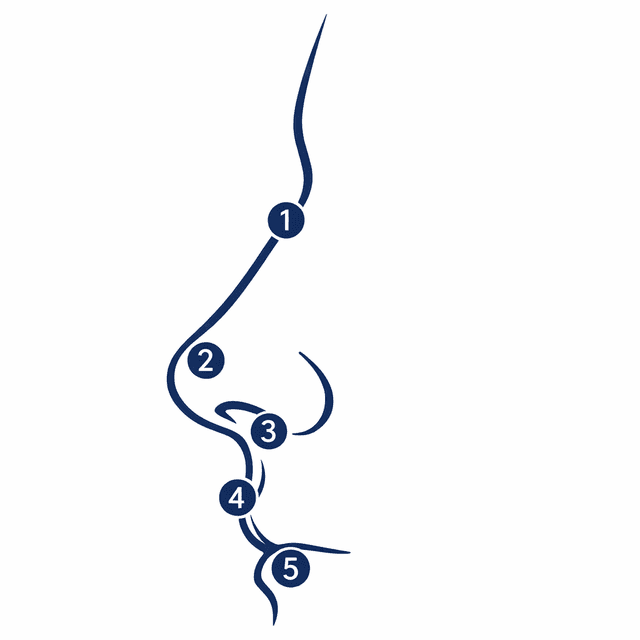
Know Your Anatomy
Which part of your nose is the concern? Tap to see the matching procedure.
Recovery & Follow-Up at a Glance
Clinic visits, stitch removal, and recovery time below are in addition to our standard aftercare — swelling management, infection prevention, and scar care through full recovery.
Duration
About 1 hour
Anesthesia
Sedation
Clinic Visits
2–3 visits
Hospital Stay
None
Stitch Removal
7 days
Planning Your Trip to Korea
We recommend staying in Korea for 14 days (7-day minimum if your schedule is tight).
Follow-up clinic visits are scheduled on day 3, day 7, day 14 after your procedure.
Complimentary daily swelling-reduction laser sessions are included throughout your stay — visit as often as you'd like.
Is this right for you?
- A crooked nose that throws off facial balance
- Breathing difficulty from a congenital condition, rhinitis, or sinusitis
- Nasal shape or function affected by an injury or accident
- Congestion or snoring you'd like resolved alongside appearance
- Needing both functional and cosmetic correction, not cosmetic alone
Not sure yet? Send a photo on WhatsApp and Dr. Lee Hee-young's team will give you an honest, no-obligation read before you decide anything.
Send a Photo on WhatsAppWhich One Matches You?
These aren't interchangeable options — each addresses a different underlying structure. Dr. Lee confirms which one fits your case during consultation.
Deviated Septum
Straightens the deviated septal cartilage and re-secures it at the anterior nasal spine, improving airflow while refining the nose line.
- 01Before: a crooked nose from septal deviation
- 02After: a straightened septal cartilage
Inferior Turbinate Hypertrophy
Reduces the size of enlarged inferior turbinates to secure enough airway space for comfortable breathing.
- 01Before: a narrowed airway from swollen inferior turbinates
- 02After: inferior turbinates restored to normal size
Nasal Valve Stenosis
Grafts cartilage to widen a narrowed nasal valve — externally with a batten graft, or internally — restoring improved airflow.
- 01External approach: graft cartilage above the lateral wall to widen the valve space
- 02Internal approach: insert cartilage to widen a narrowed valve space
Safety & What We'll Discuss
Functional corrections carry the usual surgical risks of bleeding and infection, plus a small chance that breathing improvement is partial rather than complete depending on how many structures — septum, turbinates, valve — are involved, which is assessed and explained during your 3D-CT consultation.
Why Uni
Diagnosing structures you can't see from outside
Beyond outer shape, the septum, nasal valve, and inferior turbinates are precisely mapped. 3D-CT analysis supports a plan that addresses function and appearance together.
Insurance coverage where you qualify
When your diagnosis and the planned procedure meet the criteria for conditions like deviated septum, hypertrophic rhinitis, or nasal valve stenosis, insurance coverage may apply — confirmed during consultation, with documentation support provided.
Structured aftercare through recovery
A staged follow-up system tracks swelling, pain, and scarring after surgery, with LED therapy, skin recovery support, and lymphatic care to help you return to daily life sooner.
What You Can Expect
Frequently Asked Questions
What's the difference between Deviated Septum vs. Inferior Turbinate Hypertrophy vs. Nasal Valve Stenosis?
Deviated Septum — Straightens the deviated septal cartilage and re-secures it at the anterior nasal spine, improving airflow while refining the nose line. Inferior Turbinate Hypertrophy — Reduces the size of enlarged inferior turbinates to secure enough airway space for comfortable breathing. Nasal Valve Stenosis — Grafts cartilage to widen a narrowed nasal valve — externally with a batten graft, or internally — restoring improved airflow.
How do I know which type applies to me?
Most patients can't tell from a mirror alone — deviated septum and inferior turbinate hypertrophy can look similar until Dr. Lee examines the underlying structure. Send a photo on WhatsApp for an initial read, then an in-person consultation confirms exactly which type fits your case before any decision is made.
How long is recovery, and how many days should I plan to stay in Korea?
Stitches come out around 7 days. We recommend planning to stay in Korea for about 14 days (7-day minimum if your schedule is tight) so we can see you through your follow-up visits.
Will the results look natural?
Yes. Breathing comfort restored alongside a more balanced profile Insurance-eligible functional correction where criteria are met
Is this covered by insurance?
When your diagnosis and the planned procedure meet the criteria for conditions like deviated septum, hypertrophic rhinitis, or nasal valve stenosis, insurance coverage may apply — confirmed during consultation, with documentation support provided.
Our care philosophy
A trustworthy care system — named physicians only, no ghost surgery.
Responsible medicine — the operating surgeon sees the case through from start to finish.
Patient safety first — precise pre-op workup and planning, minimized tissue damage during surgery.
Aftercare that doesn't stop at discharge — swelling management, infection prevention, scar-care program.
Individual results vary. As with any surgery or procedure, this carries risks and possible side effects. Dr. Lee reviews your specific risk factors, alternatives, and what to expect in detail during your consultation before any decision is made.
Plan Your Functional Rhinoplasty With Dr. Lee Hee-young
Book a Free Consultation